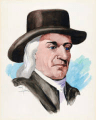
Stephen Hopkins (March 7, 1707 – July 13, 1785) a person with cerebral palsy, was an American political leader from Rhode Island who signed the Declaration of Independence in 1776. Many medical historians believe his signature on the Declaration – second in size only to that of John Hancock – is evidence that he had a disabling condition believed to be cerebral palsy. Hopkins is known for saying, “my hands may tremble, my heart does not.” He served as the Chief Justice and Governor of the English Colony of Rhode Island and Providence Plantations and was a Delegate to the Colonial Congress in Albany in 1754 and to the Continental Congress from 1774 to 1776. Hopkins was also the first chancellor of the College in the English Colony of Rhode Island and Providence Plantations (predecessor to Brown University) in conjunction with the presidency of the Baptist Reverend James Manning.
https://content.govdelivery.com/accounts/TXGOV/bulletins/15e4d2
https://constitutioncenter.org/signers/stephen-hopkins
https://www.dnswm.org/qa-founding-father-with-cerebral-palsy/

Caesar Rodney (1728–1784), a Founding Father and signer of the Declaration of Independence, suffered from severe health issues. He was a person with both advanced facial cancer and chronic asthma. He ultimately succumbed to facial cancer in 1784. Despite being seriously ill, he made a famous 80-mile “midnight ride” on horseback in 1776 to cast a tie-breaking vote for independence while physically frail. At age twenty-seven, he was appointed sheriff of Kent County; a series of local and significant offices followed with impressive speed indicating the rigorous public life to come. No Delawarean since has come close to holding the sheer number of his many significant offices.
https://www.dsdi1776.com/signer/caesar-rodney/
https://www.history.com/articles/founding-father-you-never-heard-of-caesar-rodney


