Sponsored Article from Ford Foundation: by Rebecca Cokley Director Ford Foundation’s U.S. Disability Rights program: “A New Approach to Closing the Disability Wealth Gap”

Reprinted by Ohio Capital Journal – https://ohiocapitaljournal.com/2026/10/28/a-new-approach-to-closing-the-disability-wealth-gap/

Ford Foundation

This is sponsored content from the Ford Foundation and is the second in a five-part series. The Ford Foundation’s mission is to reduce poverty and injustice, strengthen democratic values, promote national cooperation, and advance human achievement. The editorial staff of States Newsroom had no role in its production.

Sponsored Commentary

A New Approach to Closing the Disability Wealth Gap

By Rebecca Cokely – October 28, 2026 2:55 am

The new Artichoke Credit Union is designed to support the financial needs of people with disabilities and their families. The National Disability Institute reports nearly 30% of people with disabilities do not have a checking or savings account. (Photo courtesy of Ford Foundation and Jane Kratochvil Photography)

Image Description: Two green artichokes sit on a glass table with small pink flowers in low rectangular vases and a card that reads, “Artichoke, A little prickly, big heart. Designed for members with disabilities. Open to everyone. ArtichokeCU.com, a trade name of MSUFCU.”

SPONSORED

It was another financial institution’s commercial that motivated me to create something different.

Two busy white, apparently nondisabled, suburban parents were standing on their carefully manicured lawn talking about how they needed to go to the bank to plan for the future of their adult son with Down syndrome. They weren’t asking him about his future. He wasn’t going with them to the bank. As both a parent of disabled children and a disabled woman, it made me wonder: Who was talking to him about his money? Where did he want to spend it? Was there something he specifically wanted to save for?

The existing services for this type of support fall short. In fact, banking services often fail to meet the needs of disabled people. High fees and limited access to low-cost credit are common, and there is low awareness of tools such as ABLE accounts, which allow people with disabilities to save money without affecting most federally funded benefits based on need. Across the board, there is little awareness of the diverse experiences and needs of people with disabilities, and most financial institutions are not courting us as customers.

So, in collaboration with our partners, I created Artichoke Credit Union, a first-of-its-kind credit union designed with and for the disability community. In September, Ford Foundation, Robert Wood Johnson Foundation and John D. and Catherine T. MacArthur Foundation announced joint funding to support the creation of this new institution. While philanthropic support provided the necessary funding to bring Artichoke Credit Union to life, it’s important that we think beyond capital.

In partnership with Ford’s Mission Investments team, we engaged Financial Health Network, an organization in the finance sector that helps make the system more equitable for all. The goal was to conduct an in-depth landscape analysis to identify priorities, pain points and gaps in financial services for people with disabilities. The data was sobering.

According to the National Disability Institute, nearly 30% of people with disabilities are unbanked or underbanked — meaning they don’t have a checking or savings account, or they rely on alternative financial services, like check-cashing services, to access their funds — compared with 17% of nondisabled people. This analysis also found that, among unbanked individuals with disabilities, lack of trust in financial institutions is a top reason for not having a bank account. Households that include disabled people need nearly $20,000 in additional annual income to meet their needs, compared with households that do not include disabled people. And one-third of GoFundMe campaigns are for medical expenses.

Disrespect, exclusion and outright discrimination are still common for people with disabilities, too. Financial institutions have routinely denied us mortgages. The Small Business Administration does not include disabled people as eligible for the 8(a) Business Development Program, which helps those who are socially or economically disadvantaged compete for government contracts. And we are frequently mocked and asked to provide extra information to prove our need for support when accessing basic services.

The disparities compound for disabled women and people of color. Women living with disabilities make 56 cents on the dollar when compared with nondisabled men, are less likely to be employed, and are frequently the first employees to be let go, based on research conducted by the National Partnership for Women & Families. We are also more likely to work low-wage, part-time jobs that rarely provide benefits such as paid medical and family leave and health insurance. And while 24% of white Americans with disabilities live in poverty, that figure jumps to 29% for Latine people, according to a 2019 report from the National Disability Institute, the most recent data disaggregated by race available. For Black Americans with disabilities, the poverty rate skyrockets to nearly 40%.

Coupling all of the data with years of lived experience brought the picture into focus: We needed to build something better.

A key part of that was the naming process. We needed something that communicated our values and avoided the trap of inspiration porn. Ed Roberts immediately came to mind.

I grew up in the Bay Area, and my parents were involved in the disability rights movement. By then, I knew Ed Roberts personally as the powerful head of a state agency determined to help disabled people access jobs. But I had also heard stories about young Ed, who’d been diagnosed with polio and used an iron lung. I went to Burlingame High School, the same high school he’d attended years earlier via telephone because schools were not required to be accessible. I knew that young Ed wanted the same thing all people want — access to the community, a job, a family. And yet doctors told his mother and him, “You will be a vegetable.” A statement like that is incredibly heavy and so ableist, but Ed didn’t let it stop him: He declared that he would be an artichoke.

“A little prickly on the outside, but with a big heart,” he later explained. “You know, the vegetables of the world are uniting, and we’re not going away!” And when they came together, achieving young Ed’s goals became more real for him and millions of disabled people.

Being an artichoke is such a powerful sentiment. It pushes back on stereotypes determined to keep people like me, and families like mine, out of society with a blend of defiance and snark. It shows that we have to be prepared to advocate at all times, and that we are a people deserving of care and love. And it fits so well with what we are trying to do in building infrastructure for us and by us that meets our needs.

As a credit union, Artichoke is member-owned. That means that, unlike a regular bank, this is an entity owned by disabled people, our families and the organizations that support and serve us. Building infrastructure for our community at a moment when so many programs and services that folks depend on are under attack is key. At launch, Artichoke expects to offer checking and savings accounts, share certificates, personal loans, credit and debit cards, financial education resources and budgeting tools. Members will also have access to support through live chat, phone, video services and accessibility-focused features — such as account alerts, options to use supported decision-making models and other custom-designed tools shaped by the needs of the community we serve. These services and their delivery will evolve over time and in collaboration with the community through an advisory board.

Our partner, Michigan State University Federal Credit Union, has had disabled people on its board for years and employed us long before the creation of Artichoke. Its other sub-brands have served disabled students and alumni for years. That’s key to why we chose to work together. This organization knows us. Your average financial institution is not being advised by people who have had to navigate asset limits, eligibility requirements for health care and endless bureaucracies. But Artichoke is informed by those experiences, and people with those lived experiences will be at the table.

We designed Artichoke Credit Union so that no disabled person is treated as an afterthought in our own financial story. Member sign-ups are expected to begin early in the second quarter of 2027.

I still think about that commercial. But not with frustration. Today, I see it as a catalyst for change. Now, when a young man with Down syndrome, or any disabled individual, thinks about our financial future, we won’t be left standing on the lawn while others plan it for us.

Note: This piece was first published in Disability Culture Lab.

Sponsored posts allow sponsors to reach States Newsroom’s audience through brand messaging in the form of written articles. States Newsroom is now publishing sponsored content as part of our 2026-28 Strategic Initiatives to further diversify our funding sources and ensure long-term sustainability. The points of view expressed don’t necessarily reflect those of States Newsroom, and sponsors play no role in editorial decisions. States Newsroom is the nation’s largest state-focused nonprofit news organization, with reporting from every capital.

Author Info

Rebecca Cokely

Rebecca Cokely

Rebecca Cokley (she/her) is the director for the Ford Foundation’s U.S. Disability Rights program, which is focused on strengthening the field, disconnecting disability and poverty, and mobilizing resources toward disability rights work. In 2026, she co-founded Artichoke, the first credit union focusing on people with disabilities and their families. Prior to joining Ford, Rebecca was the co-founder and director of the Disability Justice Initiative at the Center for American Progress, where she stewarded a campaign that resulted in 12 presidential candidates developing disability policy platforms. A three-time presidential appointee, Rebecca served in key policy roles at the U.S. Department of Education and the U.S. Department of Health and Human Services, as well as oversaw diversity and inclusion efforts for the White House. She also served as the executive director for the National Council on Disability. Rebecca has spoken at Netroots Nation, New York City Comic Con, Yale University and the Women’s March National Conference, and has given a TedX talk. She has published with The Nation, CNN and The Washington Post, and has been a guest on MSNBC and Last Week Tonight with John Oliver. Rebecca has a bachelor’s degree in politics from the University of California, Santa Cruz, where she was a Karl Pister Scholar.

Webinars 3-4PM ET 9/15,9/22,9/29, & 10/06 Presented by United Cerebral Palsy: 2026 Latinos with Disabilities Community Series, a four-week webinar series bringing together Latino voices, lived experiences, families, professionals, advocates, and community leaders

United for Latinos with Disabilities: Together, We Are More

Join UCP for the 2026 Latinos with Disabilities Community Series, a four-week webinar series bringing together Latino voices, lived experiences, families, professionals, advocates, and community leaders.

Previously offered as a two-day virtual conference, this year’s format creates more flexibility to learn, connect, and engage throughout Hispanic Heritage Month.

2026 Latinos with Disabilities Community Series Schedule

September 15 | 3-4 p.m. ET

Disability Through Our Eyes: The ADA in Our Community

What does the Americans with Disabilities Act mean in our everyday lives and communities? Latino disability advocates and community leaders will explore the ADA through the lens of lived experience, identity, access, and self-advocacy, while discussing how disability rights can shape access to education, employment, healthcare, and community life.

REGISTER NOW

September 22 | 3-4 p.m. ET

Stronger Together: Families, Caregivers & Community Support

For many Latino families, family is at the heart of caregiving, decision-making, advocacy, and belonging. Parents, professionals, advocates, and community leaders will share perspectives on navigating barriers, building trust, strengthening support systems, and creating more culturally responsive communities where people with disabilities and their families can thrive.

REGISTER NOW

September 29 | 3-4 p.m. ET

How Stereotypes Against Latino Youth Harm Educational Outcomes

Explore how stereotypes and assumptions about language, immigration, and ability can shape how Latino students are perceived and supported in school. The conversation will examine what happens when these biases intersect with disability and learning differences, and why recognizing each student’s individual strengths, needs, and abilities is essential.

REGISTER NOW

October 6 | 3-4 p.m. ET

Workplace Inclusion & Economic Opportunities for People with Disabilities

Employment can be an important pathway to independence, economic stability, and full participation in community life. Disability advocates and ADA experts will explore employment rights, reasonable accommodations, workplace inclusion, and the role families, employers, and communities can play in expanding meaningful opportunities for people with disabilities.

REGISTER NOW

¿Prefiere leer la información en español? Visite nuestra página del evento para conocer todos los detalles de la serie en español. 

Together, we’ll elevate Latino voices, learn from one another, strengthen community connections, and work toward a future where people with disabilities can live life without limits.

This series is free to attend, but registration is required for each session.

This event is proudly sponsored by:

Waymo

United Cerebral Palsy
8401 Old Courthouse Rd
Vienna, VA 22182

CONTACT US:

(800) 872-5827

INFO@UCP.ORG

WWW.UCP.ORG

08/20, 09/17, 10/15 Zoom from CEDC Access for All: Building Digital and Document Accessibility Skills – Social Media Accessibility: Creating Inclusive Online Content

Community Education and Dissemination Council (CEDC)

12:00 PM – 1:00 PM ET Location: Zoom Format: Virtual

Thursday, August 20, 2026, 12:00 PM ET

Thursday, September 17, 2026, 12:00 PM ET

Thursday, October 15, 2026, 12:00 PM ET

All are welcome to join the CEDC on Thursday, August 20, 2026 as we continue our Access for All: Building Digital and Document Accessibility Skills series with our 3rd three-part series on Social Media Accessibility: Creating Inclusive Online Content.

Please note: CEDC quarterly meeting starts at 12:00 PM ET, Social Media Accessibility training begins around 12:30 PM ET. (feel free to join for the whole meeting or only at 12:30 PM ET for the training)

Description:
During our August CEDC Quarterly Meeting, there will be a 20-minute training on presentation accessibility. This training will cover best practices in building and sharing accessible social media communications. This is the first session of a three-part series discussing social media accessibility.

CEDC Quarterly: Introduction to Social Media Accessibility
Thursday, August 20, 2026, 12:00 PM ET
Participants will learn about social media accessibility. Covering best practices in accessible social media posts and communications.
Register Now for August 20

CEDC Coffee Chat: Building Skills
Thursday, September 17, 2026, 12:00 PM ET
Participants will engage in a hands-on workshop on how to build accessible social media. Register Now for September 15

CEDC Coffee Chat: Reflection
Thursday, October 15, 2026, 12:00 PM ET
Participants will reflect on both the challenges they face and the successes they experience when creating accessible social media.
Register Now for October 15

Please Note:

  • We will be using automated captioning through Zoom for these meetings. If you require additional accommodations please let us know by emailing accommodations@aucd.org.
  • This webinar will be held on the Zoom Platform. You can test your connection with Zoom before joining the meeting here http://zoom.us/test.
  • This webinar will be recorded and posted on this CEDC Event Page afterwards

Past Events and Resources

CEDC Coffe Chat: Access for All: Building Digital and Document Accessibility Reflection:
View Coffee Chat Reflections Recording

CEDC Coffee Chat: Access for All: Building Digital and Document Accessibility: Building Skills: Participants engaged in a hands-on workshop on how to build an accessible PowerPoint. 
View Coffee Chat Building Skills Recording

CEDC Quarterly: Access for All: Building Digital and Document Accessibility: Introduction to Presentation Accessibility: Participants learned about presentation accessibility. Covering best practices in accessible presentations and how to use a PowerPoint well when thinking about accessibility.  
View Intro to Presentation Accessibility Recording

CEDC Resources: Access for All: Building Digital and Document Accessibility Skills” Resources
View CEDC Resources on the Padlet Board

Ohio Disability Policy Candidates Forum 2026: In Person or Virtually – August 20 11:30 AM – 4 PM

By Ohio Olmstead Task Force

Fawcett Center For Tomorrow, Novice G, Columbus, OH

2400 Olentangy River Road, Columbus, OH 43210

Thursday, August 20  •  11:30 AM – 4 PM

Meet some of the candidates hoping to win your vote this fall. Learn about their understanding and intentions for the disability community.

REGISTER IN PERSON OR VIRTUALLY: https://www.eventbrite.com/e/ohio-disability-policy-candidates-forum-2026-tickets-1991560382716#location

Ohio Disability Policy Candidates Forum 2026

Join us in person or virtually for the Ohio Disability Policy Candidates Forum 2026! This is your chance to meet and hear directly from candidates running for statewide positions about their plans and commitments to the disability community in Ohio. Whether you’re passionate about advocacy, accessibility, or just want to get informed, this event is the place to be.

We hope you’ll join us for a day of connection, insight, and advocacy as we help to shape the future of disability policy in Ohio.

REGISTER IN PERSON OR VIRTUALLY: https://www.eventbrite.com/e/ohio-disability-policy-candidates-forum-2026-tickets-1991560382716#location

If you cannot access this form, email, ohioolmstead@gmail.com for direct assistance.

Organizers: Center for Disability Empowerment, Disability Rights Ohio, Independence Alliance, LEAP, Ohio Association of County Boards, Ohio Disability Vote Coalition, Ohio League of Women Voters, Ohio Olmstead Task Force, Ohio Provider Resources Association, Ohio Self-Determination Association, People First Ohio, The Ability Center, The Arc of Ohio, The Ohio Statewide Independent Living Council, University of Cincinnati Center for Excellence in Developmental Disabilities

Note: Forum organizers do not endorse any candidate or political party. This is a nonpartisan voter education event permitted under state and federal law.

Agenda

11:30 AM – 04:00 PM

Ohio Disability Policy Candidates Forum – Tentative Agenda

11:30 AM – 12:30 PM

Networking, Vendor Tables, and Refreshments

Kick off the forum by connecting with fellow attendees, advocates, and members of Ohio’s disability community. Stroll through our curated selection of vendor tables, where organizations and businesses share resources, services, and products relevant to people with disabilities. Enjoy a variety of hors d’oeuvres and beverages as you mingle, ask questions, and spark new collaborations. This hour is all about building relationships and discovering what’s new and noteworthy in Ohio’s disability policy landscape.

12:30 PM – 04:00 PM

Candidate Forum: Disability Policy Q&A

At 12:30 sharp, we’ll move to the main event: a series of focused conversations with candidates running for key statewide offices, including Governor, Lieutenant Governor, Attorney General, Secretary of State, Auditor, Treasurer, and Senate. Each candidate will address a set of prearranged questions, all centering on disability policy and issues that matter most to Ohioans with disabilities.This is your chance to hear directly from those seeking to lead our state—how they plan to address accessibility, inclusion, employment, healthcare, education, voting rights, and more. The format ensures every candidate has equal time to answer and engage, allowing for a clear comparison of their positions and priorities. Attendees are encouraged to take notes, reflect on the responses, and consider how each candidate’s vision aligns with the needs of Ohio’s disability community.

Academy Award Winner Marlee Matlin’s story & Pondering Everyone’s Talents and Abilities

As 2025 draws to a close and we celebrate many religious, cultural, and community observances that can bring us all closer together, allow me to relate a bit of Academy Award Winner Marlee Matlin’s story and a just a little bit of my own. I hope it gives you pause to think about the talents and abilities we have experienced and those we may have missed – Mark Seifarth

Recently, I watched “American Masters: Marlee Matlin: Not Alone Anymore” – WOSU TV PBS. Marlee shared her story in American Sign Language. As you recall, at 21 years old, Matlin became the first Deaf actress to win an Academy Award for her role in “Children of A Lesser God.”

While I am not a person who is deaf, as a person with a lifelong disability, her exceptional talent and ability while addressing many, many challenges along her journey greatly resonated with me. Please watch it as it brings enlightenment to everyone.

There were many experiences throughout the over one-and-a-half-hour program that are worthy of discussion and learning. I would like to briefly highlight one relatively short memory when Marlee returned to her high school and stepped on the stage of the auditorium.

She recalled never being permitted to audition for plays or perform on that stage – “I never had a chance to perform on this stage. That’s what I remember, being here. I couldn’t audition because I was deaf. I couldn’t speak, or wouldn’t speak. They would look at me, smile, pat my head, condescendingly, tell me, ‘Not now.’”

So, to say the least, that school never had the opportunity to see the beginnings of her talents and abilities. But we can imagine what that does to a young person with dreams, goals, and talent, to not be treated equally – not to be heard!

This also caused me to recollect my experience auditioning for a play in high school as I wanted to try out but I was afraid as I was the only person with a visible disability in my high school. So being one to always ask questions, I went to the theater director and asked if I could audition and what we would do. He said, audition and if you have any talent or fit any part, we will work out the rest.

Now, I wasn’t all that great. But I got to play Charles Lynch as a member of the jury of the damned in “The Devil and Daniel Webster,” Ambassador James F. Magee in “Don’t Drink the Water,” – where a used a wheelchair after I was shot – and the fire and brimstone preacher Reverend Jeremiah Brown in “Inherit the Wind.” To hold myself up while I preached the emotional and loud hell and damnation sermon, I leaned all my body weight into the stage rail we built as both the pulpit and the judge’s rail for the courtroom scenes.

To my surprise, when we were tearing down the sets, we took one swing with a hammer at the brace that held up that rail and the whole thing came tumbling down. I have always been glad I did not literally fall on my face during that performance.

Please let us think for a moment. I am eight years older than Marlee Matlin and in the early 1970’s my theater director figured out ways for me to participate in plays. But a decade later, Marlee’s theater department could not figure out how a way for her to audition to see if she fit any part in any of many plays – Why Not?

She has gone on to be a great star through her own talent and perseverance. And her high school missed it.

I have little talent, and I was able to perform – and probably very few if anyone remembers my performances.

So why am I boring you with my memories and why are they important in this context?

Because equal treatment and equal opportunity make a great difference, perhaps all the difference. And it shows us that in many ways as much as we trumpet all our differences today – we are all very much alike.

We all need support, equal treatment, and an equal chance to show our talent and grow.

Marlee had the support of Henry Winkler and a lifelong friend (watch “American Masters: Marlee Matlin: Not Alone Anymore” on PBS or on YouTube to see what I mean). I had the support of a theater director and teacher who I found out went on to be a high school principal.

Take time to ponder this. When have we missed talent, or growth, or desire, or potential in someone just because they looked, sounded, walked, talked, wheeled, communicated, or breathed differently than us. Are we all so different? Now more than ever, quietly, privately, honestly, in your own heart and soul, ask yourself that question.

AT Consideration Series: Beyond the Checkbox – 2025-2026 Sept 17, Oct 8, Dec 10, Jan 14, Feb 18, Mar 11 – Wed 3:30pm-4:15pm ET – FREE virtual professional development series – strategies/tools to support AT consideration process for all students with disabilities

AT Consideration Series: Beyond the Checkbox

September 2025 – March 2026

REGISTER BELOW SEPARATELY FOR EACH SESSION

The Assistive Technology and Accessible Educational Materials Center (AT&AEM Center) at Ohio Center for Autism & Low Incidence (OCALI) is pleased to host AT Consideration Series: Beyond the Checkbox, a FREE virtual professional development series, which takes a deep dive into the AT consideration process framed around the six steps of the AT Decision-Making Tool (ATDMT). AT Consideration is required by law to be completed at each IEP meeting. Teams must select ‘yes’ or ‘no’ on the IEP to specify whether the student requires AT devices and/or services. Thoughtful AT consideration involves examining a range of factors that guide the team toward informed decision-making. This series will guide participants through the AT Consideration process, including the six steps of the ATDMT, to build confidence in decision-making and clarify the next steps. Whether or not you’re currently using the tool, each session offers valuable insights into the core components of AT consideration, with opportunities to engage with hosts and fellow participants, plus a dedicated Q&A segment at the end of each session.

Who should attend?

Whether you’re looking to get started with the ATDMT or want to explore what drives thoughtful, evidence-based team decisions for AT consideration, this PD opportunity is designed for you! Suggested attendees include, but not limited to: intervention specialists, general educators, speech and language therapists, occupational therapists, psychologists, administrators, paraprofessionals, family members, etc. Designed to meet the needs of IEP Teams from Preschool through 12th grade.

Key Concepts and Take-aways

  • Participants will gain actionable strategies and tools to support the AT consideration process for all students with disabilities.
  • Participants will gain a deeper understanding of the six steps of the ATDMT, including universal tools, AT assessment, accessible formats, and IEP documentation, to support access to education for all students with disabilities.

Earn Credit!

0.5 Professional Development Contact Hour available for each session attended—must complete session evaluation to access certificate.

Presented by the AT&AEM Center staff at OCALI

Below are the 6 different sessions offered. Participants are not required to attend all sessions but are encouraged to attend as many sessions necessary to meet their learning needs. Each session will take a deep dive into the AT consideration process as well as the steps of the AT Decision-Making Tool. Participants who are interested in learning more about the tool and the process of AT consideration are encouraged to attend. Even if not utilizing the tool, the sessions will provide valuable information into each content area of the AT consideration process. Interactive Q&A time will be set aside at the end of every session.

All sessions are on Wednesdays from 3:30pm-4:15pm.

September 17, 2025 – Getting Started with AT Consideration: Identifying the task REGISTER: https://ocali-org.zoom.us/meeting/register/wM5CP9agTu2clEXUo1jirA#/registration

October 8, 2025 – Technology Everywhere: When Universal Tools become AT REGISTER: https://ocali-org.zoom.us/meeting/register/7YA2FrYDSsSxh_KTwTDG4Q#/registration

December 10, 2025 – Deep Dive: AT Assessment Essentials REGISTER: https://ocali-org.zoom.us/meeting/register/ym-4B-cVROWeuAAUZ5h6aQ#/registration

January 14, 2026 – Unpacking Accessible Educational Materials REGISTER: https://ocali-org.zoom.us/meeting/register/zZTI0xciSp-3yZNRszIXEw#/registration

February 18, 2026 – Deep Dive: Identifying Accessible Formats REGISTER: https://ocali-org.zoom.us/meeting/register/15qhj6PIQFiCgyZJdOpi_g#/registration

March 11, 2026 – Making it Count: Documenting in the IEP REGISTER: https://ocali-org.zoom.us/meeting/register/1-a_ejt1To6pp3CgRh00Lw#/registration

Registration

Participants need to sign up for each session they wish to attend. Reminder emails with join links will be sent the Friday before each session. Sessions will be recorded and posted at a later date on AT&AEM website. Registration for a session does not provide the participant with a recording of the session. Q&A at the end of the session will not be recorded.

Contact AT&AEM Center with any questions.

July 16th 3PM ET- Lunch & Learn: The ADA 35th Anniversary – What are your rights as a person with a disability?

Register today for the next ADA Lunch and Learn: The ADA 35th Anniversary: What are your rights as a person with a disability?

Lunch & Learn: The ADA 35th Anniversary – What are your rights as a person with a disability?

July 16 2025

3pm – 4pm Eastern Time — 12pm – 1pm Pacific Time


Description

Join the Pacific ADA Center in celebrating the 35th anniversary of the Americans with Disabilities Act (ADA). This session will provide an overview of your rights under the ADA and how the law continues to protect people with disabilities in public life. Learn how the ADA impacts everyday experiences in employment, transportation, public services, and beyond.

Presenters

Jan Garrett serves as the Deputy Director of ADA Programs for the Pacific ADA Center at the Public Health Institute (PHI). She has over 25 years of experience providing guidance and training on the ADA and other disability rights laws for businesses, state and local governments, architects, people with disabilities, and others. As a person with a lived experience of disability, Jan has a deeply personal understanding of why disability civil rights are so important.

Savannah Bradley is the Community Outreach and Programs Manager for the Pacific ADA Center, a program within the Center on Disability at the Public Health Institute (PHI). Savannah holds a Bachelor of Science in Public Health from San Diego State University and a Master of Public Health in Health Promotion and Health Behavior from Oregon State University. She worked in higher education for a decade before joining PHI in 2024 and has dedicated her career to reducing health disparities and advocating for underserved populations.

Registration information

Register now for this free online webinar

All events »

Register: July 8th Webinar Celebrating the ADA: How Assistive Technology (AT) Supports Daily Life and Work

Celebrating the ADA: How Assistive Technology (AT) Supports Daily Life and Work

Tuesday, July 8th, 2025

3:00 PM EDT – 4:30 PM EDT

REGISTER: Register for Webinar on July 8: Celebrating the ADA: How AT Supports Daily Life and Work(link is external)

Web / Online


Join the Disability Employment Technical Assistance Center (DETAC) for a special webinar in honor of the 35th anniversary of the Americans with Disabilities Act (ADA), with a focus on how technology is shaping the future of accessibility.

The ADA affirms a simple but powerful principle: individuals with disabilities who want to work should be able to work. In today’s fast-paced, technology-driven world, there have been advancements made with tools to increase accessibility. At the same time, there are basic assistive technology (AT) tools that continue to be overlooked as a solution.

The webinar panel from the Assistive Technology Act Technical Assistance and Training Center (AT3 Center) will focus on increasing access to and acquisition of AT tools across the lifespan. The panel will share examples of how AT is a critical bridge to helping break down barriers and provide innovative approaches for one to be more independent within the workplace and the broader community.

Registrants can note accommodation needs, such as captioning or sign language, on the registration page. The webinar will be live captioned (with Spanish machine translations) and have ASL interpretation available.

Webinars are recorded and posted with supporting materials on the DETAC website at: aoddisabilityemploymenttacenter.com

The Disability Employment Technical Assistance Center is funded by the Administration for Community Living (ACL) to provide evidence-based training and technical assistance to Administration on Disabilities grantees for improving competitive integrated employment and economic outcomes for individuals with disabilities across the nation.

Cost of Event:  Free

Registration Requirement: Required

Register for Webinar on July 8: Celebrating the ADA: How AT Supports Daily Life and Work(link is external)

For More Information on This Event: 

Register for Webinar on July 8: Celebrating the ADA: How AT Supports Daily Life and Work(link is external)

Sponsoring Organization(s) of Event: 

Disability Employment Technical Assistance Center (DETAC)

Audience(s): 

  • Architects/Contractors
  • Business
  • Employer
  • People with Disabilities
  • State and Local Government

Topic: 

  • ADA Anniversary

June 6th Webinar: Lunch & Learn 12-1 ET National Trends in Disability Employment (nTIDE)

nTIDE Lunch & Learn Webinar Series

ntide kessler logo

June 6, 2025 | 12:00 – 1:00pm

REGISTER: https://unh.zoom.us/webinar/register/WN_WHzgoryTSvuGnBEp-lakAw#/registration

National Trends in Disability Employment (or nTIDE) Lunch & Learn series is scheduled on the first Friday of every month, corresponding with the Bureau of Labor Statistics jobs report. The live Zoom Webinar will share the results of the latest nTIDE findings. Also, the Webinar includes news and updates from the field of Disability Employment, plus an invited panelist who will discuss current disability related findings and events.

  • 12:00 pm: Introduction & Welcome
    Andrew Houtenville, University of New Hampshire
  • 12:10 pm: Overview of National Trends in Disability Employment (nTIDE) Jobs Report
    • Release John O’Neill, Kessler Foundation
    • The Numbers Andrew Houtenville, University of New Hampshire
  • 12:15 pm: Announcements from the field of Disability Employment
    Denise Rozell, Director of Policy Innovation, AUCD
  • 12:30 pm: Guest Presenter:  
  • 12:45 pm: Open Question & Answer period for attendees

REGISTER: https://unh.zoom.us/webinar/register/WN_WHzgoryTSvuGnBEp-lakAw#/registration

Note. All webinars will be recorded and closed captioned and will be added to our website archives along with full transcripts following the live broadcast.

Presenters

Andrew Houtenville is a man with very short gray hair and beard in a brown suit

Andrew Houtenville, PhD, is a Professor of Economics and Research Director of the Institute on Disability at the University of New Hampshire. Dr. Houtenville is extensively involved in disability statistics and employment policy research. He has published widely in the areas of disability statistics and the economic status of people with disabilities. He is the Principal Investigator on the NIDILRR-funded Employment Policy and Measurement Rehabilitation and Research Training Center. Dr. Houtenville received his Ph.D. in Economics from the University of New Hampshire in 1999 & was a National Institute on Aging Post-Doctoral Fellow at Syracuse University in 1998/1999.

John O'Neill is a man with short gray hair and round glasses, wearing a suit and tie.

John O’Neill, PhD is the director of employment and disability research at Kessler Foundation and has over 28 years of experience in vocational rehabilitation as a rehabilitation counselor educator, disability employment researcher, and advisor to state vocational rehabilitation agencies. Dr. O’Neill has been a PI or co-PI on six NIDILRR funded, five-year research and training centers focusing on TBI and community integration, disability statistics, disability employment service system, and how individual and contextual factors relate to employment outcomes among people with disabilities.

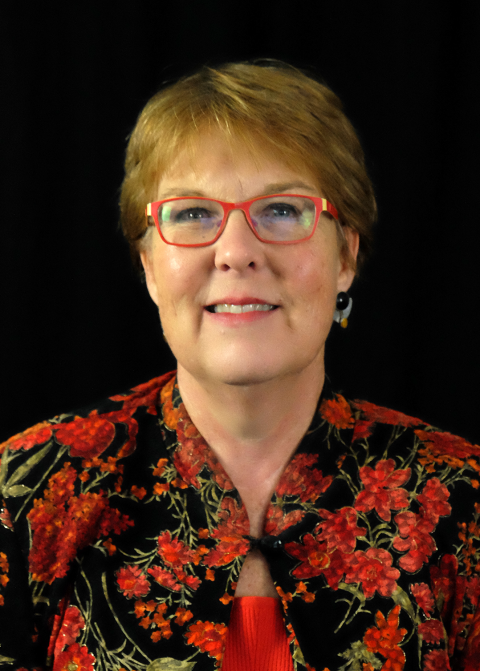
Denise Rozell is a woman with short reddish blond hair and red glasses

Denise M. Rozell, JD is the Director of Policy Innovation at the AUCD. Prior to joining AUCD, she spent fifteen years as Assistant Vice President for State Government Relations with Easter Seals. Denise was the primary resource to Easter Seals 75 affiliates in building capacity to increase awareness of and support for Easter Seals in state government. Prior to that, Denise was the Executive Director of the Association for Education and Rehabilitation of the Blind and Visually Impaired, an international membership organization for the professionals serving individuals who are blind or visually impaired. Denise holds a bachelor’s degree in political science from Occidental College in Los Angeles and a juris doctorate from Boalt Hall School of Law at the University of California in Berkeley.

REGISTER: https://unh.zoom.us/webinar/register/WN_WHzgoryTSvuGnBEp-lakAw#/registration