Join us for a “Deeper Dive” into disability statistics! Using data from a population survey released mid-month, our team of experts will explore important trends and topics with guest speakers each month.
12:00 pm: Opening Remarks and Introductions
12:10 pm: Survey Presentation, Introduction and Methodology, Results and Implications, Additional Commentary
Note. All webinars will be recorded and closed captioned and will be added to our website archives along with full transcripts following the live broadcast.
Join a “Deeper Dive” into disability statistics! Using data from a population survey released mid-month, our team of experts will explore important trends and topics with guest speakers each month.
12:00 pm: Welcome and Purpose of this Deeper Dive
12:05 pm: Updated numbers pertaining to today’s area of focus
12:20 pm: Guest Presenter
12:35 pm: Open discussion and questions for all
Note. All webinars will be recorded and closed captioned and will be added to our website archives along with full transcripts following the live broadcast.
Presenters
Andrew Houtenville, PhD, is a Professor of Economics and Research Director of the Institute on Disability at the University of New Hampshire. Dr. Houtenville is extensively involved in disability statistics and employment policy research. He has published widely in the areas of disability statistics and the economic status of people with disabilities. He is the Principal Investigator on the NIDILRR-funded Employment Policy and Measurement Rehabilitation and Research Training Center. Dr. Houtenville received his Ph.D. in Economics from the University of New Hampshire in 1999 & was a National Institute on Aging Post-Doctoral Fellow at Syracuse University in 1998/1999.
John O’Neill, PhD is the director of employment and disability research at Kessler Foundation and has over 28 years of experience in vocational rehabilitation as a rehabilitation counselor educator, disability employment researcher, and advisor to state vocational rehabilitation agencies. Dr. O’Neill has been a PI or co-PI on six NIDILRR funded, five-year research and training centers focusing on TBI and community integration, disability statistics, disability employment service system, and how individual and contextual factors relate to employment outcomes among people with disabilities.
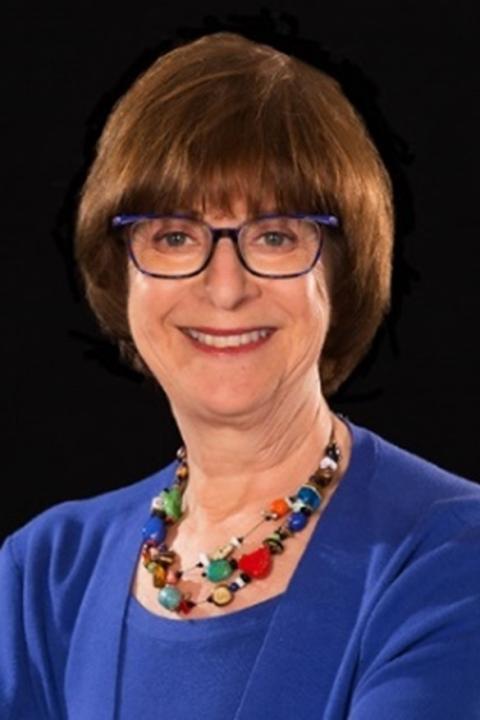
Elaine E. Katz, MS, CCC-SLP is Senior Vice President of Grants and Communications at Kessler Foundation. Elaine Katz oversees the Foundation’s comprehensive grantmaking program and its communications department. During her tenure, the Foundation has awarded more than $49 million in grant support for national and community-based employment programs. For more than 25 years, Elaine has worked with non-profit organizations in the areas of board development, fundraising, marketing, and business development. Elaine often speaks about innovative practices for employing people with disabilities, authors/co-authors articles and papers on related topics, and is a member of several aligned organizations.
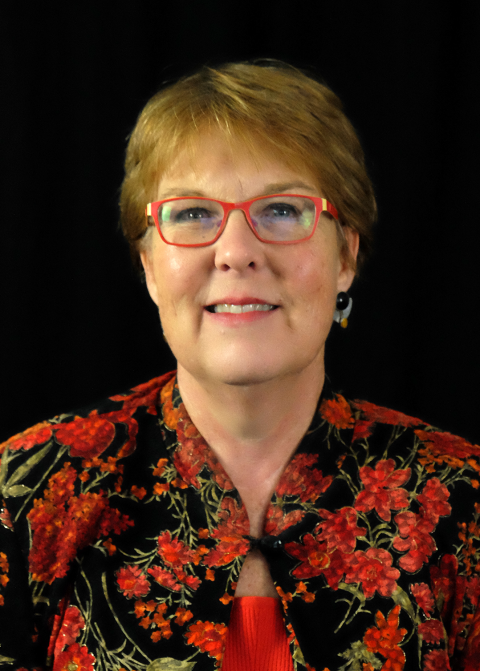
Denise M. Rozell, JD is the Director of Policy Innovation at the AUCD. Prior to joining AUCD, she spent fifteen years as Assistant Vice President for State Government Relations with Easter Seals. Denise was the primary resource to Easter Seals 75 affiliates in building capacity to increase awareness of and support for Easter Seals in state government. Prior to that, Denise was the Executive Director of the Association for Education and Rehabilitation of the Blind and Visually Impaired, an international membership organization for the professionals serving individuals who are blind or visually impaired. Denise holds a bachelor’s degree in political science from Occidental College in Los Angeles and a juris doctorate from Boalt Hall School of Law at the University of California in Berkeley.
Individuals with disabilities born after 1990 show higher employment rates than their older counterparts
July 23, 2024 – A comparative analysis of employment experiences before and after the enactment of the Americans with Disabilities Act (ADA) reveals that the “ADA generation” working-age population with disabilities (individuals born after 1990) boasts a higher employment-to-population ratio compared to the non-ADA generation with disabilities. That’s according to last Friday’s National Trends in Disability Employment (nTIDE) Deeper Dive Lunch & Learn Webinar presented by Kessler Foundation and the University of New Hampshire’s Institute on Disability (UNH-IOD).
The data also showed that the ADA generation without disabilities lags behind their non-ADA counterparts in employment rates, indicating ongoing challenges for this group. Overall, the data suggests progress in closing the employment gap between individuals with and without disabilities, largely driven by the ADA generation’s significant presence in the labor market, according to presenter Hyun Ju Kim, PhD, project director III at UNH-IOD.
Additionally, guest speaker Brittany Potvin, PhD candidate and community health worker in the Strafford County Public Health Network, New Hampshire, who is partially paralyzed as a result of a head-on collision, offered a personal overview of models of disability. She clarified the difference between ADA compliance and accessibility for people with disabilities and underscored the necessity for universal design.
ADA Generation Moves the Needle
“In 2023 to 2024, the ADA generation (people who are 34 years old and younger) had a 45% employment-to-population ratio, and for the non-ADA generation, the employment rate was far lower than that, which is 34.6%,” recounted Dr. Kim. “This has been the trend so far since the Great Recession, where the ADA generation has been driving the employment rate of people with disabilities,” she said.
Meanwhile, the overall employment rate for people without disabilities was 75.2% in 2023 to 2024. Within this group, those from the non-ADA generation had an employment rate of 79.9%, while those from the ADA generation had a lower rate of 68.4%. “This data highlights the persistent trend that the ADA generation without disabilities is less likely to be employed compared to the non-ADA generation,” asserted Dr. Kim. “Overall, it’s interesting to see the strong presence in the labor market of the ADA generation with disabilities compared to the ADA generation without disabilities,” she added.
Dr. Kim posed several hypotheses that might be driving this finding including more widely available and accepted workplace accommodations for this generation, which helps them engage in the labor market. Also, more people in this generation may be identifying themselves as disabled because the inclusion of disability in all aspects of community has helped them feel proud of their identity.
Personal Story of Resilience
Brittany Potvin shared her journey of overcoming a life-altering accident and living with visible and invisible disabilities. “Navigating life with disabilities has been challenging, but it has also given me a unique perspective on the importance of accessibility and inclusion,” she said. “The ADA has been instrumental in my ability to advocate for myself and others.” Her story underscores the importance of accessibility, inclusion, and universal design in creating equitable opportunities for people with disabilities.
“I learned that managing my disability was relative to the situation at hand. When we leave our own environments, our disabilities can become more prominent and challenging. When I’m at home, I’m not disabled because my home environment emphasizes my abilities. But unfortunately, the outside world emphasizes my limitations,” asserted Potvin.
She highlighted the ongoing societal challenges and the importance of changing perceptions. “There’s still a lot of stigma surrounding the word disabled. When we talk about accessibility, it’s often seen as a burden,” said Potvin. Working to eliminate those stigmas has been a significant focus of her efforts.
Potvin has also discovered that ADA compliance doesn’t guarantee easy accessibility for people with disabilities. Many buildings can navigate around ADA regulations and frequently qualify for exemptions, especially older, historic structures. “An idea that is still new to a lot of people is universal design, which was defined by the Centre for Excellence in Universal Design for all people, regardless of their age, size, ability, or disability,” explained Potvin.
Universal design offers significant benefits, including long-term cost savings by addressing requirements upfront, driving innovation through multidisciplinary collaboration, and engaging the workforce. “It empowers more employees to use and access content, making it easier to attract, retain, and develop employees with and without disabilities,” said Potvin. “Creating environments that are accessible to everyone, regardless of ability, not only benefits people with disabilities but also fosters a more inclusive and innovative society,” she added.
“Individuals with disabilities didn’t just appear in society yesterday, and they didn’t appear since the ADA was written into law. The battle for inclusion and accessibility has been fought for generations. My hope is that more people become aware of universal design and its benefits and that it will become the norm and there will be less hurdles for the disability community,” Potvin concluded.
Ask Questions about Disability and Employment
Each nTIDE release is followed by an nTIDE Lunch & Learn online webinar. This live broadcast, hosted via Zoom Webinar, offers attendees Q&A on the latest nTIDE findings, provides news, updates from the field, and features invited panelists who discuss current disability-related findings and events.
NOTE: The statistics in the nTIDE are based on Bureau of Labor Statistics numbers but are not identical. They are customized by UNH to combine the statistics for men and women of working age (16 to 64). nTIDE is funded, in part, by grants from the National Institute on Disability, Independent Living and Rehabilitation Research (NIDILRR) (9ORT5022 and 90RT5017) and Kessler Foundation.
About Kessler Foundation Kessler Foundation, a major nonprofit organization in the field of disability, is a global leader in rehabilitation research that seeks to improve cognition, mobility, and long-term outcomes — including employment — for people with neurological disabilities caused by diseases and injuries of the brain and spinal cord. Kessler Foundation leads the nation in funding innovative programs that expand opportunities for employment for people with disabilities. For more information, visit KesslerFoundation.org.
About the Institute on Disability at the University of New Hampshire The Institute on Disability (IOD) at the University of New Hampshire (UNH) was established in 1987 to provide a coherent university-based focus for the improvement of knowledge, policies, and practices related to the lives of persons with disabilities and their families. For information on the NIDILRR-funded Employment Policy and Measurement Rehabilitation Research and Training Center, visit www.ResearchonDisability.org.
For more information, or to interview an expert, contact:
NCD seeks public comment during June 27 Council meeting
Monday, June 24, 2024
For Immediate Release
June 24, 2024
WASHINGTON–The National Council on Disability (NCD) invites the public to present public comment during the Council’s next quarterly meeting Thursday via Zoom.
During a 30-minute public comment session starting at 4 p.m. EDT, the Council will receive input on what presenters consider the most notable disability policy achievements since Summer 2023. The Council would also like to hear about any missed opportunities within those achievements.
The public comment period provides an opportunity for NCD hear from you – individuals, businesses, providers, educators, parents and advocates.
Data from comments collected may be included in NCD’s upcoming annual Progress Report.
Those wanting to participate in public comment must preregister, either through indicating they want to provide public comment during the standard registration process for the meeting or by sending an email to publiccomment@ncd.gov by 8 p.m. EDT June 26.
Because of the virtual format, the Council will receive public comment by email or by video or audio/phone over Zoom. To provide public comment during an NCD Council Meeting, NCD now requires advanced registration by either signing up to present while registering for the meeting or sending an email to PublicComment@ncd.gov with the subject line “Public Comment” and your name, organization, state, and topic of comment included in the body of your email. Deadline for registration is June 26, 8:00 p.m. EDT.
If any time remains following the conclusion of the comments of those registered, NCD may call upon those who desire to make comments on the topic but did not register.
The Council meeting is free and open to the public. Full information on the event can also be found on our upcoming meeting page.
CART and ASL will be provided.
—————————————————————————————————————————————
ADDITIONAL MEETING INFORMATION AND REGISTRATION:
WASHINGTON–The Members of the National Council on Disability (NCD) will hold a quarterly business meeting on Thursday, June 27, 2024, 1–5 p.m EDT via Zoom.
To register for the Zoom webinar, please use the following URL:
Please join us for a celebration of the 25th anniversary of the landmark Olmstead v. L.C. Supreme Court decision, which ruled that unjustified segregation of people with disabilities is a form of unlawful discrimination under the Americans with Disabilities Act (ADA). The Olmstead decision required states to ensure that people with disabilities can receive services in the most integrated setting appropriate to their needs, opening the doors to community inclusion and integration for even more people with disabilities.
Hosted by ACL, the U.S. Department of Health and Human Services Office for Civil Rights, and the U.S. Department of Justice (DOJ), the event will take place on June 20, 2024, from 2:00 PM to 4:00 PM ET. Guests will hear from people with disabilities, federal leaders, and national experts about the impact of Olmstead, barriers to community living and true inclusion that people with disabilities still face 25 years later, and what is needed to fully realize the promise of this landmark decision.
You can attend in person at the DOJ Great Hall, 950 Pennsylvania Ave. N.W., Washington, D.C., or virtually. Once the limited seating capacity has been reached, in-person registration will close and only the virtual option will be available on the registration page.
ASL and CART will be provided. If you need other accommodations to participate, please send an email to crt.reasonableaccommodations@usdoj.gov by Friday, June 17.





 Ohio Disability Blog