(COLUMBUS, OH)—Ohio Governor Mike DeWine and Opportunities for Ohioans with Disabilities (OOD) Director Kevin L. Miller announced OOD’s new webinar series for 2025, which aims to foster both community and workplace inclusion for Ohioans with disabilities.
“Everyone has a role to play in making sure people with disabilities are welcomed and supported in our communities and workplaces,” said Governor DeWine. “This year’s webinar series is another step forward in our ongoing efforts in Ohio to promote inclusion and accessibility, and to empower all people to reach their full, God-given potential.”
“We invite you to join us for valuable insights on how to create communities and workplaces that are not only accessible but also embrace individuals with disabilities,” said Director Miller. “The series culminates with three webinars designed to equip employers with the tools they need to foster disability-inclusive workplaces.”
Webinar Schedule
January 15: Accessible Communications
February 19: Website Accessibility
March 19: Utilizing ADA Tools
April 17: All About Service Animals
May 21: Technology in the Workplace
June 18: Safety and Emergency Management
July 16: All About Sensory Inclusion
September 17: Disability-Inclusive Workplaces: Inclusive Leadership
October 22: Disability-Inclusive Workplaces: Attracting Diverse Talent
November 20: Disability-Inclusive Workplaces: Retaining Diverse Talent
All webinars begin at 10 a.m. and will be Microsoft Teams webinars.
Each webinar will be recorded and archived for future viewing. More information and registration links to all upcoming webinars can be found at Employer Events. People who participate in these webinars can earn professional development credits. More information is included below.
The no-cost webinar series marks the latest example of the administration’s commitment to making Ohio a national leader in accessibility.
Moments after taking the oath of office, one of Governor DeWine’s first actions was signing an executive order establishing Ohio as a Disability Inclusion State and Model Employer of Individuals with Disabilities.
Under Governor DeWine’s leadership, OOD also launched Accessible Ohio. Through this initiative, Accessible Ohio Specialists work directly with communities, businesses, and other local partners to identify opportunities to enhance accessibility.
Accessible Ohio is one of many ways OOD supports and promotes businesses that prioritize inclusivity. OOD offers a bevy of information for employers, including an Inclusive Employer Toolkit designed to help employers recruit, hire, and retain employees with disabilities and foster an inclusive workplace.
OOD also recently awarded its annual Governor’s Inclusive Employer Award, which serves as an opportunity to spotlight businesses in Ohio that go above and beyond in supporting individuals with disabilities in the workplace.
Webinar Credit Information
Each webinar has been approved for 1.00 HR (General) re-certification credit hour toward aPHR™, aPHRi™, PHR®, PHRca®, SPHR®, GPHR®, PHRi™ and SPHRi™ re-certification through HR Certification Institute® (HRCI®) and 1.00 SHRM Professional Development Credit (PDC) hour toward SHRM-CP® or SHRM-SCP®. While this training is not pre-approved for CESP Continuing Education (CE) credit, it aligns with CESP content, and verification of attendance will be provided upon request. These credits are available for attendees of the live broadcast.
Individuals with disabilities born after 1990 show higher employment rates than their older counterparts
July 23, 2024 – A comparative analysis of employment experiences before and after the enactment of the Americans with Disabilities Act (ADA) reveals that the “ADA generation” working-age population with disabilities (individuals born after 1990) boasts a higher employment-to-population ratio compared to the non-ADA generation with disabilities. That’s according to last Friday’s National Trends in Disability Employment (nTIDE) Deeper Dive Lunch & Learn Webinar presented by Kessler Foundation and the University of New Hampshire’s Institute on Disability (UNH-IOD).
The data also showed that the ADA generation without disabilities lags behind their non-ADA counterparts in employment rates, indicating ongoing challenges for this group. Overall, the data suggests progress in closing the employment gap between individuals with and without disabilities, largely driven by the ADA generation’s significant presence in the labor market, according to presenter Hyun Ju Kim, PhD, project director III at UNH-IOD.
Additionally, guest speaker Brittany Potvin, PhD candidate and community health worker in the Strafford County Public Health Network, New Hampshire, who is partially paralyzed as a result of a head-on collision, offered a personal overview of models of disability. She clarified the difference between ADA compliance and accessibility for people with disabilities and underscored the necessity for universal design.
ADA Generation Moves the Needle
“In 2023 to 2024, the ADA generation (people who are 34 years old and younger) had a 45% employment-to-population ratio, and for the non-ADA generation, the employment rate was far lower than that, which is 34.6%,” recounted Dr. Kim. “This has been the trend so far since the Great Recession, where the ADA generation has been driving the employment rate of people with disabilities,” she said.
Meanwhile, the overall employment rate for people without disabilities was 75.2% in 2023 to 2024. Within this group, those from the non-ADA generation had an employment rate of 79.9%, while those from the ADA generation had a lower rate of 68.4%. “This data highlights the persistent trend that the ADA generation without disabilities is less likely to be employed compared to the non-ADA generation,” asserted Dr. Kim. “Overall, it’s interesting to see the strong presence in the labor market of the ADA generation with disabilities compared to the ADA generation without disabilities,” she added.
Dr. Kim posed several hypotheses that might be driving this finding including more widely available and accepted workplace accommodations for this generation, which helps them engage in the labor market. Also, more people in this generation may be identifying themselves as disabled because the inclusion of disability in all aspects of community has helped them feel proud of their identity.
Personal Story of Resilience
Brittany Potvin shared her journey of overcoming a life-altering accident and living with visible and invisible disabilities. “Navigating life with disabilities has been challenging, but it has also given me a unique perspective on the importance of accessibility and inclusion,” she said. “The ADA has been instrumental in my ability to advocate for myself and others.” Her story underscores the importance of accessibility, inclusion, and universal design in creating equitable opportunities for people with disabilities.
“I learned that managing my disability was relative to the situation at hand. When we leave our own environments, our disabilities can become more prominent and challenging. When I’m at home, I’m not disabled because my home environment emphasizes my abilities. But unfortunately, the outside world emphasizes my limitations,” asserted Potvin.
She highlighted the ongoing societal challenges and the importance of changing perceptions. “There’s still a lot of stigma surrounding the word disabled. When we talk about accessibility, it’s often seen as a burden,” said Potvin. Working to eliminate those stigmas has been a significant focus of her efforts.
Potvin has also discovered that ADA compliance doesn’t guarantee easy accessibility for people with disabilities. Many buildings can navigate around ADA regulations and frequently qualify for exemptions, especially older, historic structures. “An idea that is still new to a lot of people is universal design, which was defined by the Centre for Excellence in Universal Design for all people, regardless of their age, size, ability, or disability,” explained Potvin.
Universal design offers significant benefits, including long-term cost savings by addressing requirements upfront, driving innovation through multidisciplinary collaboration, and engaging the workforce. “It empowers more employees to use and access content, making it easier to attract, retain, and develop employees with and without disabilities,” said Potvin. “Creating environments that are accessible to everyone, regardless of ability, not only benefits people with disabilities but also fosters a more inclusive and innovative society,” she added.
“Individuals with disabilities didn’t just appear in society yesterday, and they didn’t appear since the ADA was written into law. The battle for inclusion and accessibility has been fought for generations. My hope is that more people become aware of universal design and its benefits and that it will become the norm and there will be less hurdles for the disability community,” Potvin concluded.
Ask Questions about Disability and Employment
Each nTIDE release is followed by an nTIDE Lunch & Learn online webinar. This live broadcast, hosted via Zoom Webinar, offers attendees Q&A on the latest nTIDE findings, provides news, updates from the field, and features invited panelists who discuss current disability-related findings and events.
NOTE: The statistics in the nTIDE are based on Bureau of Labor Statistics numbers but are not identical. They are customized by UNH to combine the statistics for men and women of working age (16 to 64). nTIDE is funded, in part, by grants from the National Institute on Disability, Independent Living and Rehabilitation Research (NIDILRR) (9ORT5022 and 90RT5017) and Kessler Foundation.
About Kessler Foundation Kessler Foundation, a major nonprofit organization in the field of disability, is a global leader in rehabilitation research that seeks to improve cognition, mobility, and long-term outcomes — including employment — for people with neurological disabilities caused by diseases and injuries of the brain and spinal cord. Kessler Foundation leads the nation in funding innovative programs that expand opportunities for employment for people with disabilities. For more information, visit KesslerFoundation.org.
About the Institute on Disability at the University of New Hampshire The Institute on Disability (IOD) at the University of New Hampshire (UNH) was established in 1987 to provide a coherent university-based focus for the improvement of knowledge, policies, and practices related to the lives of persons with disabilities and their families. For information on the NIDILRR-funded Employment Policy and Measurement Rehabilitation Research and Training Center, visit www.ResearchonDisability.org.
For more information, or to interview an expert, contact:
ADA & Advocacy – Like Final Exams – Really Never End Mark E Seifarth In 1979, I was the first student in Kent State University history to give the main commencement address. And while that is needed background, it is not the important point in this introduction. The focal point is the subject of the commencement speech itself – “The Finals are Never Over.” No more all-nighters, no more waking up late for an exam, or four or five exams in the same week after graduation to be sure – but the journey, the challenges, the aspirations, and yes, the sorrows are never over. In fact, according to my address, they are just beginning for graduates and most others. Fast forward to July 26, 2024, the 34th anniversary of the Americans with Disabilities Act (ADA). We need to celebrate our inclusion, opportunities, and equal access for people with disabilities in employment, government, public accommodation, communication, to name a few. Furthermore, let’s celebrate June 22, 2024, the 25th anniversary of the U.S. Supreme Court Olmstead Decision concluding that the ADA prohibits unnecessary segregation of people with disabilities in institutions AND have the right to live and receive services in the most appropriate integrated setting in their communities. For many of us feeling that we now have at least a seat at the table in running our own lives and had earned “nothing about us without us” in our own communities, perhaps, just perhaps, we would have a respite from paternalism, nothing but the medical model, professionals asked about our lives before us, and more. But after we celebrate, the work continues, the journey continues, and unfortunately sometimes discrimination and separateness still occur. There also continues to be very positive inclusive movements forward resulting from our education and advocacy. Governor DeWine’s initiative – included in Ohio’s last two-year budget – required appointing at least one person with a disability eligible for services to each of Ohio’s 88 County Boards of Developmental Disabilities (DD) in 2025 and after. This has increased the discussion and support for ongoing training for all County Board of DD members as to their responsibilities and duties. Prior to that, Ohio became an Employment First State that presumes all Ohioans, including people with significant disabilities, can and should have the opportunity (and support & training) to work in their communities. But looking to just some of the challenges ahead in inclusion and fairness: • The Supreme Court just decided that a homeless person can be ticketed or arrested for sleeping in a public park or public space even though there is no other adequate shelter or affordable place in the community to live or sleep. • The Supreme Court just overturned a 40-year-old standard for decision making that required federal courts to defer to reasonable agency decisions where federal law is unclear or silent. So, courts will not have to accept expertise from the very agencies that oversee laws when regulations are challenged perhaps weakening those very laws. • While our veterans have received some coverage for illnesses resulting from burn pits, the need is very high for support of post-traumatic stress disorder, traumatic brain injury, hearing loss, illness caused by toxic exposure and other injuries • Accessible, affordable housing for people with disabilities is still unavailable or out or reach in many areas We are in a time of significant change. In the past, one could argue our lack of rights and inclusion was simple paternalism or we know better than you do. But now in some areas, rights are being reexamined, diminished and taken away. In 2018, U.S. Senator Tammy Duckworth and 42 of her Senate colleagues wrote a letter to Senate leadership pledging to block the ADA Education & Reform Act that had passed the U.S. House because it would have undermined enforcement provisions that safeguard accessibility in public accommodations. Senator Duckworth’s advocacy ensured the ADA would not be significantly weakened. Like Senator Duckworth, we must continue to advocate and educate for equal rights and opportunities, because now we see that rights earned can just as easily be taken away. Who knew that in 1979 – The Finals Are Never Over – would be even more true today! Now list the issues most important to you. Education and advocacy continue to be a team effort across an ever-widening need for everyone to be treated with equality and equity. Reach out to support others in their advocacy and learn from them as they learn from you. The journey and challenges ahead – and need to work together – may be best summed up in this quote from Martin Neimoller, a prominent Lutheran pastor, who spent the last eight years of Nazi rule in Nazi prison and concentration camps – and is perhaps best remembered for his Postwar Statement: ➢ “First they came for the socialists, and I did not speak out – because I was not a socialist. Then they came for the trade unionists, and I did not speak out – because I was not a trade unionist. Then they came for the Jews, and I did not speak out – because I was not a Jew. Then they came for me – and there was no one left to speak for me.”
ADA Anniversary: History of the Disability Rights Movement
Wednesday, July 24th, 2024
1:00 PM PDT – 2:30 PM PDT
Location: Online
Join us for an upcoming webinar exploring the history of discrimination and how the ADA changed the lives of people with disabilities. This session will highlight key aspects in the disability rights movement and legislation that led to greater access and inclusion.
Learning Objectives:
Learn about key moments in the history of the Disability Rights movement
Understand how the ADA has shaped disability related rights
Understand where the movement and its goals are today
ADA & Advocacy – Like Final Exams – Really Never End Mark E Seifarth
In 1979, I was the first student in Kent State University history to give the main commencement address. And while that is needed background, it is not the important point in this introduction. The focal point is the subject of the commencement speech itself – “The Finals are Never Over.” No more all-nighters, no more waking up late for an exam, or four or five exams in the same week after graduation to be sure – but the journey, the challenges, the aspirations, and yes, the sorrows are never over. In fact, according to my address, they are just beginning for graduates and most others. Fast forward to July 26, 2024, the 34th anniversary of the Americans with Disabilities Act (ADA). We need to celebrate our inclusion, opportunities, and equal access for people with disabilities in employment, government, public accommodation, communication, to name a few. Furthermore, let’s celebrate June 22, 2024, the 25th anniversary of the U.S. Supreme Court Olmstead Decision concluding that the ADA prohibits unnecessary segregation of people with disabilities in institutions AND have the right to live and receive services in the most appropriate integrated setting in their communities. For many of us feeling that we now have at least a seat at the table in running our own lives and had earned “nothing about us without us” in our own communities, perhaps, just perhaps, we would have a respite from paternalism, nothing but the medical model, professionals asked about our lives before us, and more.
But after we celebrate, the work continues, the journey continues, and unfortunately sometimes discrimination and separateness still occur. There also continues to be very positive inclusive movements forward resulting from our education and advocacy. Governor DeWine’s initiative – included in Ohio’s last two-year budget – required appointing at least one person with a disability eligible for services to each of Ohio’s 88 County Boards of Developmental Disabilities (DD) in 2025 and after. This has increased the discussion and support for ongoing training for all County Board of DD members as to their responsibilities and duties. Prior to that, Ohio became an Employment First State that presumes all Ohioans, including people with significant disabilities, can and should have the opportunity (and support & training) to work in their communities.
But looking to just some of the challenges ahead in inclusion and fairness: •The Supreme Court just decided that a homeless person can be ticketed or arrested for sleeping in a public park or public space even though there is no other adequate shelter or affordable place in the community to live or sleep. •The Supreme Court just overturned a 40-year-old standard for decision making that required federal courts to defer to reasonable agency decisions where federal law is unclear or silent. So, courts will not have to accept expertise from the very agencies that oversee laws when regulations are challenged perhaps weakening those very laws. •While our veterans have received some coverage for illnesses resulting from burn pits, the need is very high for support of post-traumatic stress disorder, traumatic brain injury, hearing loss, illness caused by toxic exposure and other injuries •Accessible, affordable housing for people with disabilities is still unavailable or out or reach in many areas
We are in a time of significant change. In the past, one could argue our lack of rights and inclusion was simple paternalism or we know better than you do. But now in some areas, rights are being reexamined, diminished and taken away. In 2018, U.S. Senator Tammy Duckworth and 42 of her Senate colleagues wrote a letter to Senate leadership pledging to block the ADA Education & Reform Act that had passed the U.S. House because it would have undermined enforcement provisions that safeguard accessibility in public accommodations. Senator Duckworth’s advocacy ensured the ADA would not be significantly weakened. Like Senator Duckworth, we must continue to advocate and educate for equal rights and opportunities, because now we see that rights earned can just as easily be taken away. Who knew that in 1979 – The Finals Are Never Over – would be even more true today! Now list the issues most important to you. Education and advocacy continue to be a team effort across an ever-widening need for everyone to be treated with equality and equity. Reach out to support others in their advocacy and learn from them as they learn from you.
The journey and challenges ahead – and need to work together – may be best summed up in this quote from Martin Neimoller, a prominent Lutheran pastor, who spent the last eight years of Nazi rule in Nazi prison and concentration camps – and is perhaps best remembered for his Postwar Statement:
➢“First they came for the socialists, and I did not speak out – because I was not a socialist. Then they came for the trade unionists, and I did not speak out – because I was not a trade unionist. Then they came for the Jews, and I did not speak out – because I was not a Jew. Then they came for me – and there was no one left to speak for me.”
“The Accessible Ohio Playbook – Session 6: The Game Plan” will guide entities in taking the next step toward increased inclusion and share how Accessible Ohio can assist with identifying barriers and creating accessibility in programs, services, and environments.
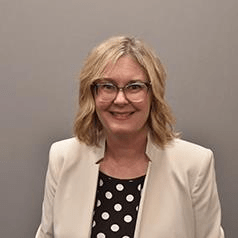
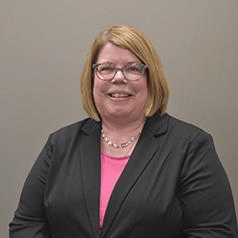
The presenters are Accessible Ohio Specialists, Tanya Vela, OTR/L, ADAC and Shelly Burkhart, ADAC.
Speakers (2)
Tanya Vela
Accessible Ohio Specialist, OTR/L, ADAC Opportunities for Ohioans with Disabilities
Tanya Vela, OTR/L, ADAC – Tanya is the Accessible Ohio Specialist for Southeast Ohio. In this role, Tanya supports Ohio’s businesses, communities, venues, and attraction to be accessible and inclusive through individualized consultations, education, and resources. In addition to being a registered and licensed occupational therapist with a bachelor’s degree, Tanya has a master’s degree in health care administration. She is also a certified Americans with Disabilities Act Coordinator.
Shelly Burkhart
Accessible Ohio Specialist, ADAC Opportunities for Ohioans with Disabilities
Shelly Burkhart, ADAC – Shelly is the Accessible Ohio Specialist for Northwest Ohio. In this role, Shelly supports Ohio’s businesses, communities, venues, and attractions to be accessible and inclusive through individualized consultations, education, and resources. Shelly joined OOD in March 2016 as a Vocational Rehabilitation Counselor and has a bachelor’s and a master’s degree in sociology. She is also a certified Americans with Disabilities Act Coordinator.


 Ohio Disability Blog