From Ohio Statehouse This Week: When Combating Medicaid Fraud, Listen to People with Disabilities & Families First – Mark Seifarth

When Combating Medicaid Fraud, Listen to People with Disabilities & Families First

Mark Seifarth

This week the Ohio Legislature passed a bill to help combat what they say was out of control Medicaid fraud with a self-imposed deadline on June 10th. Even though the bill was introduced on March 25, 2026, it was not referred to committee for hearings until May 13th for completion before the legislature’s summer break starting June 11th.

In its haste to root out waste, fraud, and abuse, it almost made it illegal for parents and family caregivers – many of whom quit their jobs to stay at home and care for their children with significant disabilities – to bill Medicaid after they pass all needed background checks and training to become certified Medicaid providers.

It was only when the disability community, parents, and advocates traveled from all over Ohio to tell their stories that legislators realized they had moved too quickly. For if you remove thousands of parents as direct service providers for their children with significant disabilities, there are not enough qualified service providers available to replace them. Children and adults with significant disabilities for the most part could be forced into more expensive institutions and intermediate care facilities as a result.

Thanks to statewide advocacy, technology that allows people to watch committee hearings live, read bills and amendments online, send online testimony to the committees, and an accessible Statehouse to testify in person – this did not happen.

It also helps that organizations, like the Ohio Developmental Disabilities Council, provide educational videos to help people with disabilities learn to speak for themselves and express their needs.

Here’s a link to one such video: https://www.youtube.com/watch?v=BZu5W2Qp9sg

Indeed, there is fraud in the Medicaid system. On June 8th, the Acting U.S. Attorney General came to Ohio with the Medicaid Chief and others to announce a new federal state system to share data and fight “fraudsters.” They also announced several major federal and state charges against 9 defendants for allegedly defrauding the government of $42 million in billing to Medicaid and COVID programs.

In fact, Federal Trade Commission Chair Andrew Ferguson said, “Ohio’s Medicaid Fraud Control Unit is one of the gold standard control units.” While state legislators have criticized the governor, the Acting U.S. Attorney General said of Ohio’s governor “… we can have people that actually do and act.” Here is the link to the June 8th article: https://ohiocapitaljournal.com/2026/06/08/ohio-feds-announce-indictments-in-medicaid-fraud/

To be clear, there is still Medicaid fraud and this bill headed to the governor – for his consideration to be signed into law – may help. But in their haste to pass a bill with a self-imposed deadline of less than one month and only 5 hearings, one could argue that thousands of Ohioans with disabilities were put at risk if the disability community – many with disabilities making it very difficult to travel – had not shown up and spoken up for themselves.

As former Ohio Senate staff, state agency liaison to the Ohio Legislature, and Congressional Liaison for the National Council on Disability in Washington, DC, I know how hard State Legislators, Members of Congress, and their staff people work. I wrote letters/emails to State Legislators, and they responded and investigated the issue.

But my contributions are miniscule next to the parents, advocates, and people with disabilities who drove hours – and I heard even borrowed money for gas and missed needed therapy sessions for their children – to testify in person. Great praise is due to all of them for educating our legislators on the very negative impact on this too quickly moving piece of legislation.

Perhaps as a person with a Developmental Disability, when I was a staffer and saw this legislation, I would have immediately called and inquired of my local Boards of Developmental Disabilities and advocacy groups in the community on the impact to people with disabilities and more information on fraud and abuse. But maybe as fast as this bill was moving, only many, many people across the state could have had the needed impact they did.

We must combat what everyone calls waste, fraud, and abuse of taxpayers’ money as that is hard earned money from Ohioans needed to serve Ohioans. We must be vigilant.

But I have been impacting public policy in Ohio and Washington, DC for over 40 years and I must admit that I am unsettled and disquieted that it took hundreds of Ohioans writing, calling, and traveling to Columbus to testify in person to correct this catastrophic error in the Legislatures’ haste.

Remember Ohio’s Biennial Budget takes at least 6 months to pass and become law. Most legislation takes months and sometimes years to be hashed out and debated. Thanks to education, technology, and hard work, people listened and changes were made.

In the disability community there is an old and hard-fought saying, “Nothing about us without us.” Much of the public testimony presented on this bill centered on people with disabilities, parents, and advocates saying ask us how to improve the system. We are involved as it is our lives. We will and have pointed out fraud and it was addressed.

Ohio Gov DeWine & Lt Gov Tressel Recognize Assistive Technology Awareness Day April 22nd

Governor Mike DeWine & Lt. Governor Jim Tressel today recognized April 22, 2026, as National Assistive Technology (AT) Awareness Day.

The day honors people with disabilities who require AT to access their education, workplace, community, recreational activities, and to live independently. The day also recognizes the innovation of researchers, educators, and the dedication of AT specialists and program providers who operate AT programs so that millions of individuals can acquire and use low-cost and often no-cost AT.

What is Assistive Technology?

Assistive Technology (AT) is any item, piece of equipment, software program or product systems that is used to increase, maintain, or improve the functional capabilities of people with disabilities.

Assistive Technology of Ohio (AT Ohio) works with people of all ages and abilities, providing assessments, equipment demos, short-term device loans, used refurbished computer equipment, training and referrals to funding sources. AT Ohio, part of the College of Engineering at The Ohio State University, is Ohio’s official Assistive Technology Act program. AT Ohio is funded under the Administration for Community Living (ACL).

“Every year, new technology is created to help Ohioans with disabilities achieve in school, succeed in the workplace, and live more independent and inter-connected lives,” said Dr. William Darling, Director of Assistive Technology of Ohio. “Technology gives people with disabilities the chance to compete in the classroom, succeed in the world of work, and live more independent and inter-connected lives.”

“l would like to thank Governor DeWine and Lt. Governor Tressel for recognizing National Assistive Technology Day and for their on-going commitment and support of technology to help improve the lives of Ohioans with disabilities,” added Dr. Darling.
For more information, contact Eric Rathburn at 614-688-3222 or email at rathburn.17@osu.edu. More information can also be found on National AT Awareness Day on the Association of Assistive Technology Act Programs (ATAP) website at https:([ataporg.org/national-at-awareness-day/. For more information about AT Ohio, go to http://www.atohio.org.

Oct 15, 2025 3-4PM ET Webinar: Your Rights As A Person with a Disability Under the ADA in Employment-Pacific ADA Center

October 15, 2025
Your Rights As A Person with a Disability Under the ADA in Employment: A Deeper Dive

Registration is open!

Join Pacific ADA Center staff for an in-depth look at your rights in the workplace under the ADA. This session will explore reasonable accommodations, the interactive process, disclosure, and protections during hiring and employment. Whether you’re a job seeker or currently employed, this session will help you better understand your rights and advocate for yourself at work.

Session Date: October 15, 2025
Session Time: 12 Noon-1 PM PT — 3-4 PM ET

Register for this webinar today!

Sept 2nd 12-1PM ET – Next Mid-Atlantic ADA Center Webinar Series – Fighting for Civil and Disability Rights: Strategies to Overcome Barriers

The Human Experience of Black People with Disabilities and Their Rights Under the ADA

REGISTER: https://lp.constantcontactpages.com/ev/reg/axs6uxa

Join us as we unpack this research study and provide you with a comprehensive understanding of the opportunities, as well as the challenges and barriers, faced by Black individuals with disabilities in accessing information and exercising their rights under the Americans with Disabilities Act (ADA). By presenting the findings of this study, we will highlight the discrimination and marginalization these individuals experience, while also exploring avenues for advocacy, collective action, and support.

The Intersection of Race, Disability, and the ADA: Findings from a Focus Group Study

March 4, 2025, 12:00 to 1:00 p.m. ET

This study explores the intersection of race, disability, and rights under the ADA. On this webinar we shared key themes from the research, including the systemic barriers Black individuals with disabilities face in exercising their rights. Topics included access to information about the ADA, the role of advocacy, and recommendations to improve access, awareness, and inclusion. We will highlighted the strength and resilience of Black disabled communities, as well as strategies for collective action to address injustice.

Previous Webinars recorded and is available for on-demand: https://www.adainfo.org/trainings/

Intersectionality: Unpacking Discrimination, Stigma, and Multiple Marginalization

June 3, 2025, 12:00 to 1:00 p.m. ET

Intersectionality recognizes that individuals hold multiple, interconnected social identities—such as race, disability, gender, and class—that interact in shaping their experiences of privilege and oppression. For Black individuals with disabilities, these overlapping identities often lead to compounded barriers in exercising rights and accessing opportunities under the ADA. This webinar will explore how these intersecting identities create specific vulnerabilities in areas like healthcare, education, employment, and public spaces. Through real-world examples, we will examine the impact of intersectional discrimination on Black disabled communities and discuss actionable strategies to address these challenges. By the end of the session, participants will be equipped with the tools to analyze and advocate for the rights of Black individuals with disabilities through an intersectional framework.

Previous Webinars recorded and is available for on-demand: https://www.adainfo.org/trainings/

Fighting for Civil and Disability Rights: Strategies to Overcome Barriers

September 2, 2025, 12:00 to 1:00 p.m. ET

For Black individuals with disabilities, systemic barriers can present unique challenges in securing equal opportunities and exercising fundamental rights. This webinar will delve into the legal landscape of civil and disability rights, highlighting key legislation and protections. We will explore common barriers faced by individuals with disabilities, including discrimination, inaccessible environments, and lack of inclusive policies. Participants will learn advocacy strategies to overcome these obstacles, ranging from self-advocacy and community organizing to legal recourse and policy engagement.

The Power of Visibility and Community Advocacy

December 2, 2025, 12:00 to 1:00 p.m. ET

Visibility matters. When we share our stories and perspectives, we challenge stereotypes, build empathy, and inspire others to action. This webinar will explore how embracing visibility can combat the intersectional discrimination faced by Black disabled individuals. We’ll discuss how sharing your authentic experiences can spark important conversations, foster understanding, and drive social change within your communities. Learn practical strategies for leveraging your voice and platform, building alliances, and engaging in effective community advocacy to amplify your impact.

June 6th Webinar: Lunch & Learn 12-1 ET National Trends in Disability Employment (nTIDE)

nTIDE Lunch & Learn Webinar Series

ntide kessler logo

June 6, 2025 | 12:00 – 1:00pm

REGISTER: https://unh.zoom.us/webinar/register/WN_WHzgoryTSvuGnBEp-lakAw#/registration

National Trends in Disability Employment (or nTIDE) Lunch & Learn series is scheduled on the first Friday of every month, corresponding with the Bureau of Labor Statistics jobs report. The live Zoom Webinar will share the results of the latest nTIDE findings. Also, the Webinar includes news and updates from the field of Disability Employment, plus an invited panelist who will discuss current disability related findings and events.

  • 12:00 pm: Introduction & Welcome
    Andrew Houtenville, University of New Hampshire
  • 12:10 pm: Overview of National Trends in Disability Employment (nTIDE) Jobs Report
    • Release John O’Neill, Kessler Foundation
    • The Numbers Andrew Houtenville, University of New Hampshire
  • 12:15 pm: Announcements from the field of Disability Employment
    Denise Rozell, Director of Policy Innovation, AUCD
  • 12:30 pm: Guest Presenter:  
  • 12:45 pm: Open Question & Answer period for attendees

REGISTER: https://unh.zoom.us/webinar/register/WN_WHzgoryTSvuGnBEp-lakAw#/registration

Note. All webinars will be recorded and closed captioned and will be added to our website archives along with full transcripts following the live broadcast.

Presenters

Andrew Houtenville is a man with very short gray hair and beard in a brown suit

Andrew Houtenville, PhD, is a Professor of Economics and Research Director of the Institute on Disability at the University of New Hampshire. Dr. Houtenville is extensively involved in disability statistics and employment policy research. He has published widely in the areas of disability statistics and the economic status of people with disabilities. He is the Principal Investigator on the NIDILRR-funded Employment Policy and Measurement Rehabilitation and Research Training Center. Dr. Houtenville received his Ph.D. in Economics from the University of New Hampshire in 1999 & was a National Institute on Aging Post-Doctoral Fellow at Syracuse University in 1998/1999.

John O'Neill is a man with short gray hair and round glasses, wearing a suit and tie.

John O’Neill, PhD is the director of employment and disability research at Kessler Foundation and has over 28 years of experience in vocational rehabilitation as a rehabilitation counselor educator, disability employment researcher, and advisor to state vocational rehabilitation agencies. Dr. O’Neill has been a PI or co-PI on six NIDILRR funded, five-year research and training centers focusing on TBI and community integration, disability statistics, disability employment service system, and how individual and contextual factors relate to employment outcomes among people with disabilities.

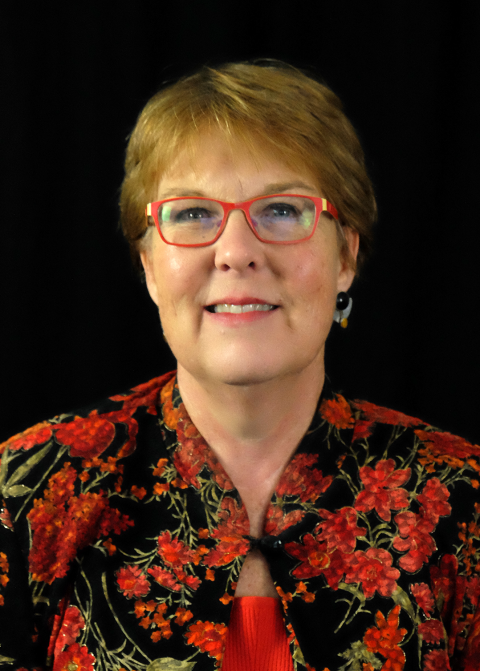
Denise Rozell is a woman with short reddish blond hair and red glasses

Denise M. Rozell, JD is the Director of Policy Innovation at the AUCD. Prior to joining AUCD, she spent fifteen years as Assistant Vice President for State Government Relations with Easter Seals. Denise was the primary resource to Easter Seals 75 affiliates in building capacity to increase awareness of and support for Easter Seals in state government. Prior to that, Denise was the Executive Director of the Association for Education and Rehabilitation of the Blind and Visually Impaired, an international membership organization for the professionals serving individuals who are blind or visually impaired. Denise holds a bachelor’s degree in political science from Occidental College in Los Angeles and a juris doctorate from Boalt Hall School of Law at the University of California in Berkeley.

REGISTER: https://unh.zoom.us/webinar/register/WN_WHzgoryTSvuGnBEp-lakAw#/registration